|
LATEST NEWS & ANNOUNCEMENTS
POSTED 3/27/11 Clinton Board Meeting Report (see end)
POSTED 8/19/08
QUESTIONS TO THE STERLING BOARD OF SELECTMEN (CLICK TO READ)
BENEFIT CONCERT 9/20/08
SUMMARY/OVERVIEW
WHAT IS HAPPENING?
-
June 2013 Update including OVERVIEW SUMMARY of the entire history/situation since the 1800s
-
CLINTON WANTS TO SELL THE
WATERS OF THE WEKEPEKE FOR PROFIT;
-
THEY HAVE NO RIGHT TO DO SO; AND
-
THE PEOPLE OF STERLING NEED TO DECIDE FOR
THEMSELVES WHETHER THIS SHOULD BE
PERMITTED TO HAPPEN AND IF SO, ON WHAT
BASIS.
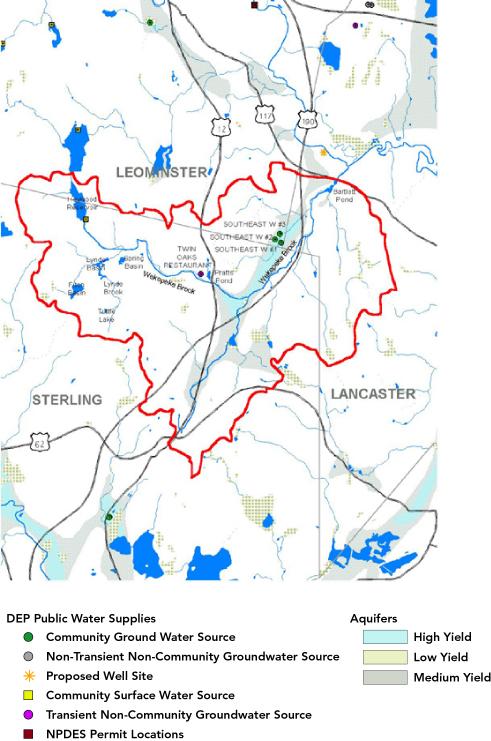
WHERE IS THE WEKEPEKE?
WHAT ARE WE TALKING ABOUT?
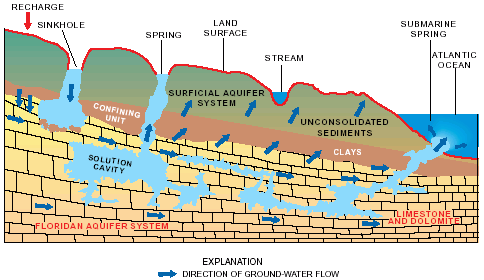
DEFINITIONS
“Aquifer”- A water-bearing stratum of permeable sand
and/or gravel, and impermeable layers of rock.
“Groundwater”- all water beneath the earth’s surface
“Spring” -the result of an aquifer being filled to the
point that the water overflows onto the land surface.
“Surface Water”-all water on the earth’s surface,
including brooks, streams, springs, rivers, lakes,
ponds, and oceans.
“Water Table”- The level below earth’s surface at
which the subsurface is fully saturated with water.
WHAT HAPPENED?
- 1800's- Clinton had a water supply but wanted
a gravity fed water system to avoid costs of
building and installing another pump-fed
system.
- Legislation passed in 1876- authorized Clinton
to withdraw surface waters from a Pond
outside of Sterling, to supply this water only
to Clinton and its inhabitants.
- Legislation passed in 1882-surface waters of
the Wekepeke were added to that list.
- Affected property owners in Sterling had to
sell their land to Clinton or it was "taken".
- Clinton stopped using the Wekepeke as a
town water supply in 1964.
- Now Clinton wants to sell the Wekepeke
surface water and groundwater for profit as
revenue stream for Clinton
LONG RANGE DECISION:
CONSERVATION OR EXPLOITATION?
- Aquifers are subject of increasing oversight
and protection.
- MGL Chapter 30, Section 61 Nov.7, 2007
amended definition of “damage to
environment” to further include “reduction in
groundwater.”
- Aquifers are source of purest waters on earth!
- Finite supply of fresh water- industrial
contamination has rendered surface water in
many countries useless-only recourse is
preservation of the aquifers.
- “These companies fail to assign adequate
value or pay the full cost of the economic,
social, and environmental damage they
cause,” stated Food & Water Watch Executive
Director Wenonah Hauter.
IMMEDIATE CONCERN:
DOES CLINTON HAVE THE RIGHT
TO SELL THIS WATER?
- NO!
- Legislation authorized Clinton to withdraw only
surface water & only to supply itself and its
inhabitants with water for their own end-use as
town water supply.
- Clinton withdrew surface water by gravity feed
only. Surface water included spring water (i.e.
surface water that results from an aquifer being
filled to the point it overflows onto the earth’s
surface). Spring water is therefore surface water
and not groundwater.
- Nestle says what it is pumping out of the aquifer is
“spring water” before it reaches earth’s surface and
becomes less pure, and is therefore the spring
water that Clinton has always withdrawn from the
Wekepeke off the surface. However, Nestle would in
fact be withdrawing groundwater from the aquifer.
- Clinton has no right to (a) withdraw groundwater;
(b) authorize anyone else to do so; (c) transport
that water across Clinton-owned Wekepeke land for
commercial purposes; nor (d) the right to use
existing pipelines to transport that water anywhere
other than to Clinton as a town water supply.
WHAT ARE THE KNOWN RISKS?
- Potential of pressing nonrenewable resource of Sterling to its limit
or beyond it. (“Most scientists consider groundwater a
nonrenewable resource.”12-9-03 The Environmental Magazine)
- Why? Nestle’s allegation that they are taking spring water like
Clinton did, is being used to imply that their withdrawals of
240,000 gal/day are small compared to Clinton’s 1.2 million
gal/day. Is Nestle laying groundwork to eventually pump at least
1.2 million gallons of groundwater per day from aquifer or more?
Given reputation- ABSOLUTELY!
- When bottled water is sold internationally, trade rules can limit
ability of governments to regulate withdrawal of that water from
aquifers! 1.2 Million gal/day may be for starters!
- USGS-withdrawals of groundwater can cause water levels in
aquifer systems to drop, ultimately decreasing flow from springs
i.e reduction in surface water means less water in lakes, ponds,
reservoirs, streams and springs, posing obvious environmental
risks e.g. to fauna such as trout.
- 60+ tanker truck trips per day on State/ local roads in Sterlingdanger,
noise, dust, near and possibly long-term. Establishment of
nearby commercial/industrial facilities e.g. bottling plants, transfer
stations etc. due to length of project (30 years or more)
probably likely. May reduce traffic somewhat, but does Sterling
want this industry in town?
- If local wells become compromised or useless- no meaningful
recourse is being offered by Nestle.
NESTLE-GOOD CORP. CITIZEN ?
- We’ve seen it in McCloud, where they stated categorically
their withdrawals wouldn’t affect Squaw Creek — without
even bothering to monitor existing flows to make certain
they didn’t.
- In Maine — after being told repeatedly by people of
Fryeburg that Nestlé’s proposed 50-trucks/ day loading
station wasn’t welcome — they filed suit, lost, appealed to
the Maine Supreme Court, lost again ( YouTube video ).
- Nestle already argued before the Maine Supreme Court
that their right to grow their market share superceded the
town’s right of self-determination.
- Later, MCWC and Nestle reached agreement that allowed
Nestle to continue pumping less than half the 500,000
gallons per day they had been taking.
- Ice Mountain In Michigan - Activists lauded Root's 68-
page decision, which detailed the harm the pumping is
causing to streams and ponds in the area and lambasted
Nestlé for trying to mislead the public and for obtaining
permits based on reports that "even the defense now
admits were inaccurate, incomplete or otherwise flawed.“
- The case has worked its way to the Michigan Supreme
Court, where the issue doesn't revolve around the
damage done by Nestlé’s aggressive pumping, but
whether the citizens group was entitled to bring suit in the
first place.
LATEST NEWS/EVENTS/ANNOUNCEMENTS
POSTED 8/19/08
QUESTIONS TO THE STERLING BOARD OF SELECTMEN (CLICK TO READ)
POSTED 3/26/08
WEKEPEKE PROGRESS REPORT, REQUEST FOR MORE PETITION HELP; OUR WEBSITE AND
A MEETING ON APRIL 3, FIRST CHURCH, STERLING AT 7:00 P.M.
At the Sterling Selectmen's meeting on March 18, 383 letters, and petitions signed by 404 individuals, were presented to the Selectmen and to our state representatives, clearly stating that a significant number of Sterling voters do not want the water of the Wekepeke aquifer to be sold to Nestle or any other corporate entity. We have reason to believe that the letters and petitions had a significant impact on the Selectmen, turning the tide, so to speak, in their view of a possible deal with Clinton and Nestle.
Based on what was said at the meeting on the 18th and on discussion at the regularly scheduled Board of Selectmen's meeting on the 19th, we believe that the Sterling Selectmen now may intend to oppose the current plan for Clinton to sell the Wekepeke aquifer water. There is, however, no certainty about what lies ahead.
Therefore, it is important that we keep up the pressure, and even more important that our Selectmen and state representatives know the position of the people of Sterling on this vital issue.
There is now talk by the Selectmen of a non-binding referendum, to clarify to the Selectmen how the town feels about the proposed deal. We believe that additional signatures on the petition will have a more immediate and more significant impact, a louder voice and one that is just as valid as an (uncertain) non-binding referendum at some yet-to-be-disclosed time in the future.
The petition has been the loudest, clearest voice on this issue so far. We need to make it even louder and clearer. We now have 510 signatures on the petition. Most of these were gathered by a handful of hard-working CIC members, some of you included, over a THREE DAY PERIOD! Terrific job! Thank you!
Our goal is to gather 1,500 more signatures, so that this voice of Sterling cannot be ignored. For this, we need more help from more of you.
If you are able to visit neighbors, people who live on streets and roads near yours, or even to go across town to collect signatures, please let me know. If you are willing to stand at the post office or the recycling center (you'll meet some really interesting folks!), or visit the barber shop, the Senior Center, your church or one of the markets to gather signatures, your help is needed. Ask a friend or neighbor to go with you. You may have other ideas of how and where to get signatures. Let us know.
If you can help in this effort, let me know by replying to this email message. I will provide you with what you need to get going and get those signatures.
For those who can't work on the petition, we expect to soon have a bank account (we've spent over $500 of our own money already, mostly for copying expenses). We will be making an appeal for financial contributions sometime soon to help pay back some of that, and to cover other expenses as we move forward.
Please have a look at our website: www.sterlingcitizens.org <http://www.sterlingcitizens.org/> . It is still a work in progress, but already has a beautiful image and important facts about the Wekepeke, along with some interesting links. Many thanks to webmaster Will Sherwood for donating his work on our site.
Finally, there will be a CIC meeting on at the First Church, Sterling, on Thursday, April 3 at 7:00 with a special guest speaker, Gail Darrow from Nottingham, NH. Nottingham has had experience with attempted corporate withdrawal of its groundwater, and Gail will talk about how the town has pulled together and developed an ordinance to prevent this. Please come and hear Gail, hear an update of Sterling's situation, discuss the CIC's future plans and contribute your ideas and suggestions. See you there!
Donna
Clinton Board Meeting Report 3/26/11
Wekepeke
Piotr Parasiewicz, PhD, who works for Rushing Rivers Institute, the group commissioned by Nestle Waters to study the Wekepeke Watershed, gave a detailed presentation about his and his colleagues’ findings.
Nestle commissioned the study because they “recently proposed development of [a] water withdrawal site upstream,” Parasiewicz’s summary said.
Parasiewicz said their final report was still in a draft phase, but the findings suggest the water needs some attention.
“Remnant water works infrastructure and recent housing encroachment has resulted in the impression of a much more human impacted stream than was initially expected,” the summary said.
It continued to explain the watershed has some very positive signs of life, but they are diminishing due to stress.
“We found a high density of freshwater mussels of one species, [the] eastern pearl shell. Freshwater mussels are a critical component of the ecosystems, due to their capacity of filtering substantial amounts of water,” said Parasiewicz. “However, the low number of mussel juveniles found, indicates low recruitment levels of this long living species.”
This study was relevant to Clinton because “the town still holds right to the reservoirs as a potential supplemental water supply.”
Since the construction of the Wachusett Reservoir – completed in 1908 – Clinton has not used Wekepeke’s water, but it technically still belongs to the town.
|